

CPLA Lid
Why Choose Us?
Quality Control
Our material and products are certified with BPI(ASTM D6400), Din Certco(EN13432), and are food contact safe with FDA and EU test reports.
Custom Service
We provide compostable material and products to plastic manufacturers and end customers, and offer custom solutions according to customers' requirements.
Advanced Equipment
Our company has tableware packing machine, injection molding machine, napkin folding machine etc.
High quality
Our compostable tableware and other products are made of PLA and other compostable material. They are eco-friendly, non-toxic, food contact safe and naturally antibacterial.
-
![Cpla Paper Bowl Lid]()
Made of PLA, 100% biodegradable and compostable.. Heat resistant up to 100 Celsius, leak-proof.
-
![Cpla Paper Cup Lid]()
Made of PLA, 100% biodegradable and compostable.. Heat resistant up to 100 Celsius, leak-proof.
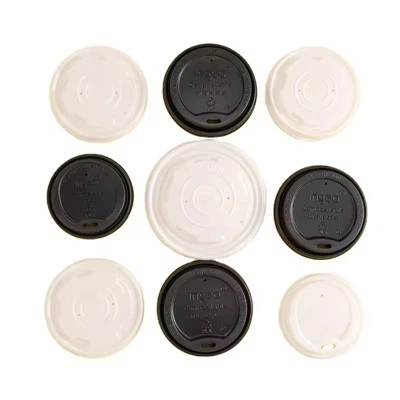

What is CPLA Lid?
CPLA = Crystallized PLA. It's processed by applying high pressure and heat to PLA, chalk, and other biodegradable and bio-based additives. This causes the material to crystallize, resulting in a harder product that's less susceptible to heat degradation. CPLA lids are commonly used for coffee cups.
OEM & ODM Services of CPLA Lid
Diameter Customization
The diameter of the CPLA lid can be customized on demand, covering a variety of sizes to fit different containers. The small size is 2-3 inches (about 5-7.6 cm), which is suitable for small-capacity containers for single-person servings, such as high-end restaurant tasting sauce cups, mini dessert cups, and portable personal care product samples. It can be easily taken and ensure sealing and freshness. The medium size of 3.5-4.5 inches (about 8.9-11.4 cm) is the most common, mostly used for daily drink cups and regular food containers, such as medium-sized coffee cups, ordinary yogurt cups, and medium-sized soup and salad takeaway boxes in the catering takeaway industry, which can effectively prevent drinks or food from spilling. The large size of 5-6.5 inches (about 12.7-16.5 cm) is mainly used for large-capacity containers, such as large barrels of yogurt for families, large takeaway boxes, and even containers for industrial use or bulk packaging products that meet regulations, which can prevent food contamination and leakage and meet the needs of sealing and protecting products.
Thickness Options
The thickness of the CPLA lid can be customized on demand, and different thicknesses are suitable for different scenarios. The thinnest thickness is 0.01-0.03 inches (about 0.25-0.76 mm), which is common in disposable, lightweight applications. For example, the disposable coffee cup lids of coffee chains are mostly about 0.02 inches thick, and the small lids for small sauce cups and beverage stirring sticks in the fast food industry are also commonly 0.015-0.025 inches thick. The medium thickness is 0.035-0.05 inches (about 0.89-1.27 mm), which is suitable for containers that require a certain strength and durability but are not used repeatedly for a long time. For example, the lid of a medium-sized yogurt cup in an ordinary supermarket is about 0.04 inches thick, and the lid of a medium-sized soup and salad takeout box in a catering takeout is often 0.04-0.045 inches thick, which can withstand slight collisions and squeezes and ensure sealing. Thicker thickness of 0.055 - 0.08 inches (about 1.4 - 2.03 mm) is used for containers that need to be used for a long time, opened and closed repeatedly, or subjected to large external forces, such as reusable water cups and thermos cup lids, which are mostly 0.06 - 0.07 inches thick.
Color Customization
CPLA lids are highly flexible in color customization. Common customized colors are natural, black, white and transparent. Natural color shows the simplicity and nature of the material, which is suitable for environmentally friendly and original ecological products; black is suitable for products that need to be stored away from light and packaging that pursues a stable and professional sense because of its high recognition and light-shielding properties; white conveys a simple, fresh and hygienic image, and is widely used in food and high-end daily necessities packaging; transparent color allows consumers to see the product directly, enhancing its attractiveness and credibility, and is suitable for beverage cups and food storage boxes.
Closure And Sealing Mechanism
CPLA lids can be designed with snap-on or screw-in closures. Snap-on lids can be installed and removed quickly and easily, making them suitable for single-use or on-the-go applications, such as disposable coffee cups. On the other hand, screw-on lids provide a more secure seal and are often used for reusable containers or products that require long-term storage. For example, a reusable water bottle with a CPLA lid might use a screw-on mechanism to prevent leaks during shipping or storage.
In addition, the design of the sealing gasket inside the CPLA lid can also be customized. A soft rubber or silicone gasket can be added to ensure a tight seal to prevent air and liquid leakage. The thickness and shape of the gasket can be adjusted based on the specific container and application. For example, a container for carbonated beverages may require a thicker, more flexible gasket to withstand the pressure of carbonation.
Biodegradability and eco-friendliness
CPLA hot cup lids are derived from renewable resources, such as corn starch or sugarcane, making them biodegradable and environmentally friendly. These lids have a reduced impact on the environment compared to traditional plastic lids, as they break down naturally over time, minimizing waste accumulation.
Heat resistance
CPLA hot cup lids are designed to withstand high temperatures, ensuring that they remain sturdy and secure when used with hot beverages. They offer excellent heat resistance, making them suitable for sealing and insulating hot drinks without warping or melting.
Leak-resistant design
To prevent spills and leaks, CPLA hot cup lids are engineered with a secure fit and a tight seal. They are designed to effectively contain liquids within the cup, reducing the risk of accidents and ensuring a mess-free drinking experience.
Compatibility and versatility
CPLA hot cup lids are typically designed to fit standard-sized cups commonly used in food and beverage establishments. They are available in various diameters and can accommodate different cup sizes, providing compatibility and versatility for businesses that offer a range of beverage options.
Reliable quality
With advancements in production technology, CPLA cutlery boasts improved quality and durability, enhancing the dining experience without compromising on material safety. Additionally, CPLA cutlery complies with food safety standards, ensuring consumer health and well-being.
Flat Lids
These are the most common type of lid. They are simple and inexpensive, and they are available in a variety of sizes and materials. Flat lids are suitable with Cold drinks like water, soda, juice, and iced tea.
Domed Lids
These lids have a dome shape that helps to keep spills and splatters at bay. They are often used for hot beverages such as Coffee, tea, smoothies, milkshakes, iced coffee, and iced lattes
Straw Lids
These lids have a small hole for a straw. They are convenient for cold beverages like water, soda, juice, iced tea, smoothies, and milkshakes.
Sipper Lids
These lids have a small spout that allows the user to drink without lifting the lid.
Double-walled Lids
These lids have two layers of material, which helps to insulate the beverage and keep it warm or cold.

Application of CPLA Lid
Microwavable packaging
CPLA lids are microwave-safe, enabling consumers to reheat food conveniently without removing the lid.
Takeaway and delivery
CPLA lids are used in takeaway and delivery services due to their durability and sealability, ensuring food remains secure during transport.
Catering services
CPLA lids are used in catering for events and conferences, as they are disposable yet durable, and meet the growing demand for sustainable solutions.
Hotels and cafes
In hotels and cafes, CPLA lids are used for coffee cups, food containers, and condiment packaging, offering a balance between convenience and environmental responsibility.
Process of CPLA Lid
The manufacturing of CPLA Lid begins with the extraction of raw materials, typically derived from renewable sources like corn or sugarcane. This extraction process involves harvesting the plants and processing them to obtain starch.
The extracted starch undergoes a fermentation process, where microorganisms break down the starch molecules into lactic acid. This lactic acid is then polymerized to form PLA pellets.
To create CPLA, the PLA pellets undergo a crystallization process where they are heated and cooled in a controlled manner. This process results in the formation of crystalline structures within the material, enhancing its strength and heat resistance.
The CPLA material is molded into Lid shapes using specialized machinery. The Lid are formed with precision and undergo quality checks to ensure they meet the required standards.
How to Maintain CPLA Lid
Select a cold, dry location
Store CPLA lid in a cold, dry location, such as a pantry or cupboard.
Use storage containers
To avoid CPLA lid from becoming crushed or damaged, store them in clean, dry containers or on solid shelves.
Rotate stock
Use older lid first to ensure they are eaten in a timely manner.
Consistently inspect
Before using lid, regularly check them for signs of degradation or damage.
Comparing CPLA VS. PLA

Choosing between CPLA and PLA depends on the size and strength of the restaurant supplies you need. In most cases, PLA will be strong enough for your purposes. PLA is often used to create windows in windowed containers like our Kraft Paper Baguette Bag with PLA Window. It is also used to make cutlery since it has many of the properties of traditional plastic. You could very likely switch your restaurant’s traditional plastic utensils with PLA utensils without any of your customers realizing it.
In situations where you need larger restaurant supplies with a more rigid structure, CPLA is the better choice. This includes large utensils, such as tablespoons or serving spoons. CPLA can also be used to make large trays for catering services. In many cases, both options are used to make lids for eco-friendly food containers.
Factors Influencing CPLA Lid Decomposition
The decomposition rate of CPLA Lid depends on various factors:
Environmental conditions
●Temperature: Warmer climates generally facilitate faster decomposition, while colder temperatures slow down the process.
●Moisture: Adequate moisture levels enhance microbial activity, accelerating decomposition.
●Oxygen availability: Aerobic conditions promote faster degradation compared to anaerobic environments.
Size and thickness
Thicker CPLA utensils may take longer to decompose compared to thinner ones due to the surface area available for microbial action.
Microbial activity
Microorganisms play a crucial role in breaking down CPLA Lid. The presence of bacteria, fungi, and other decomposers determines the speed of degradation.
Advantages Over Conventional Plastic Lid
Compostable CPLA Lid offers numerous advantages over conventional plastic utensils. Its biodegradability, eco-friendliness, and comparable performance make it an attractive choice for businesses and consumers alike.
Usage and disposal
Compostable CPLA Lid is designed for single-use applications, making it ideal for various events, gatherings, and food services. After use, it can be composted alongside organic waste, minimizing landfill contributions and promoting a circular economy.
Practical applications
From restaurants and catering services to household dining, compostable CPLA Lid finds widespread use across various sectors. Its versatility, durability, and sustainable attributes make it a preferred choice for eco-friendly dining solutions.
Sustainability initiatives
Businesses and organizations are increasingly adopting compostable CPLA Lid as part of their sustainability initiatives. By making the switch from conventional plastic utensils, they demonstrate a commitment to environmental stewardship and corporate responsibility.
The demand for compostable bioplastics, including PLA and CPLA, is on the rise because of their reduced impact on the environment and their growing availability to consumers.
CPLA is mechanically the same PLA except that it has been crystallized, making it able to withstand higher temperatures and causing it to be white rather than transparent. PET is not biodegradable, but it is lightweight and strong, and can be recycled. The manufacturing process for these bioplastics is environmentally friendly and a great alternative to traditional plastic manufacturing due to less energy usage, fewer greenhouse emissions and no toxic fumes.
The versatility of these materials makes their applications broad, from food service items, food storage and trash bags. CPLA can withstand higher heat, making it an ideal alternative to plastics such as polystyrene for coffee cups, soup containers and other hot items.
In conclusion, the benefits of PLA and CPLA bioplastics cannot be overstated. These materials offer a more sustainable and eco-friendly alternative to traditional plastic due to their renewable plant-based raw materials, less harmful manufacturing processes, and easy compostability or recyclability. As individuals and businesses we all should continue to prioritize sustainability and environmental responsibility, it's clear that bioplastics are becoming increasingly necessary.
Our Factory
Shanghai Exquisite Biochemical Co., Ltd (Hereinafter PLAbiochem) is an enterprise specialized in the R&D, production and sales of compostable plastic material and products.

FAQ
We're professional cpla lid manufacturers and suppliers in China, specialized in providing high quality customized service. We warmly welcome you to buy high-grade cpla lid for sale here from our factory.
cpla lid, cpla paper cup lid, cpla paper bowl lid