

Compostable Paperboard Cutlery
Why Choose Us?
Quality Control
Our material and products are certified with BPI(ASTM D6400), Din Certco(EN13432), and are food contact safe with FDA and EU test reports.
Custom Service
We provide compostable material and products to plastic manufacturers and end customers, and offer custom solutions according to customers' requirements.
Advanced Equipment
Our company has tableware packing machine, injection molding machine, napkin folding machine etc.
High quality
Our compostable tableware and other products are made of PLA and other compostable material. They are eco-friendly, non-toxic, food contact safe and naturally antibacterial.

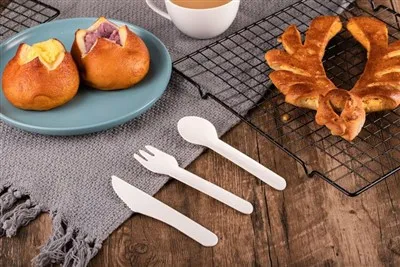
An innovative solution that combines functionality with sustainability is paper cutlery. Unlike their plastic counterparts, they can be easily composted or recycled after use, reducing waste and preventing further pollution.
Paper cutlery can withstand hot liquids without melting or warping for a certain amount of time, making them suitable for all sorts of culinary delights. Plus, their smooth texture ensures a comfortable eating experience while minimizing any potential harm to your health.
Custom Sizes
The size of compostable paperboard cutlery can be adjusted to suit different uses. For example, in casual dining environments such as food trucks or picnic areas, smaller forks, spoons, and knives with a length between 5 and 7 inches may be preferred as they help users eat smaller portions of food more easily. In formal dining settings or when serving larger entrees, longer cutlery with a length of 8 to 10 inches may be used to provide a more elegant dining experience. The width of the tines of forks, spoon bowls, and knife blades can also be customized. For example, wider tines of about 0.2 to 0.3 inches on a fork may be better for picking up larger pieces of food, while a narrower width of 0.1 to 0.15 inches may be suitable for more delicate foods.
Material Composition
Compostable paperboard cutlery is usually made from a combination of natural fibers. A common base material is recycled pulp, which can be blended with other fibers such as bamboo fiber or bagasse (the fibrous residue left after sugarcane is crushed). For example, a mix of 70% recycled pulp and 30% bamboo fiber can create strong, natural-looking cutlery. The proportions of each component can be adjusted to suit the specific application requirements. If you want to increase the strength of heavier or harder foods, you can add a higher proportion of bamboo fiber (for example, 40% to 50%). In addition, various additives can be added to the material mix to give it specific properties. For example, adding a small amount (about 2% to 5% by weight) of a biodegradable plasticizer such as glycerol can increase the flexibility of the cutlery, making it easier to handle and use. In addition, antimicrobial agents (at concentrations of about 0.5% to 1%) can be added to prevent the growth of bacteria and fungi on the surface of the cutlery during storage and use, especially when used to handle perishable foods.
Cutlery Shapes
The shape of compostable paperboard cutlery can be customized to suit different eating styles and food types. For example, the tines of a fork can be designed to be straight or slightly curved, depending on whether it is used to pick up solid foods such as meat or to handle more slippery foods such as pasta. The bowl of a spoon can be in a variety of shapes, such as a deep round bowl for soups and stews, or a shallow flat bowl for desserts and cereals. The blades of knives can be straight or serrated, depending on whether they are used to cut soft or hard foods.
Color Customization
The color customization of compostable paperboard cutlery is quite diverse, and common colors include natural primary colors and color series. Natural primary colors include natural colors that present a sense of simplicity and nature, similar to light brown or beige, which are in line with the concept of environmental protection and naturalness, and are suitable for places or brands that focus on original ecology and healthy eating; there is also a widely used white that can create a simple and hygienic visual effect and coordinate with the color of the food, especially for formal dining occasions and other places where cleanliness is required. In the color series, green is related to environmental protection and vitality, which can highlight the environmental characteristics of the product and is suitable for packaging organic food, salads, etc. or green environmental protection theme activities; blue brings a fresh and calm feeling, and can be used to package seafood, cold food, etc. to create a cool and hygienic impression and is eye-catching; yellow is bright and lively, with high recognition, and can be used to package specialty foods, desserts, etc. to add a cheerful atmosphere to celebrations, parties, and other occasions; brown has a warm and retro feeling, and is suitable for traditional retro-style restaurants or packaging foods with similar colors such as coffee and chocolate to achieve a harmonious match. Different colors can be flexibly customized according to specific needs and scenarios to meet diverse usage requirements and visual effects.
Reduce Plastic Waste
The proliferation of plastic waste is a pressing environmental issue, with millions of tons of discarded plastic cutlery ending up in landfills and oceans annually. Traditional plastic cutlery, made from non-degradable polymers, persists in the environment for hundreds to thousands of years, leading to significant ecological damage. By contrast, biodegradable disposable cutlery, designed to break down quickly under the right conditions, offers a solution to this mounting problem.
Adopting Compostable Paperboard Cutlery significantly reduces the volume of waste that ends up in our ecosystems. These products decompose into harmless organic compounds, mitigating the adverse effects on wildlife and natural habitats. The transition to biodegradable options can drastically cut down the amount of plastic pollution, contributing to cleaner oceans, rivers, and landscapes.
Reduce Carbon Footprint
The environmental impact of plastic cutlery extends beyond waste generation; it also encompasses the carbon footprint associated with its production, distribution, and disposal. The manufacturing process of plastic cutlery relies heavily on fossil fuels, both as a raw material and in the energy consumed during production, leading to significant CO2 emissions.
Compostable Paperboard Cutlery, on the other hand, is typically made from materials that require less energy to produce. For example, cutlery made from cornstarch or bamboo not only utilizes renewable resources but also results in lower greenhouse gas emissions throughout its lifecycle. The reduced energy requirements for production, coupled with the ability of these materials to be composted, thus returning nutrients to the soil, embody a cycle that significantly lowers the carbon footprint compared to traditional plastics.
Biodegradability And Compostability
One of the most compelling advantages of Compostable Paperboard Cutlery is its ability to break down naturally, transforming into water, carbon dioxide, and biomass within a relatively short period. This biodegradability is crucial for reducing the volume of waste in landfills and for facilitating a more sustainable cycle of resource use.
Compostable cutlery takes this a step further by not only breaking down but doing so in a way that contributes positively to the environment. When composted, these materials enrich the soil, improving its quality and fertility. This process supports plant growth, helps retain moisture in the soil, and reduces the need for chemical fertilizers, promoting organic agricultural practices.
Renewable And Sustainable Materials
The core appeal of Compostable Paperboard Cutlery lies in its use of renewable and sustainable materials. Unlike traditional plastic cutlery, which relies on finite petroleum-based resources, biodegradable alternatives are often made from materials like bamboo, wood, cornstarch, and other plant-based polymers. These materials are not only abundant but also renewable, meaning they can be regrown at a pace that meets or exceeds human consumption rates.
Food Consumption Safety
Using Compostable Paperboard Cutlery eliminates the risk of these chemicals leaching into food, especially when exposed to heat, ensuring a safer dining experience. Moreover, the natural composition of these materials means they are inherently non-toxic, providing peace of mind for consumers concerned about the health impacts of their eating utensils.
Application of Compostable Paperboard Cutlery
Outdoor Events
Any event held outdoors is a perfect match for the elegant, natural look of compostable paperboard cutlery. Plus, being able to dispose of them when finished is a must when outdoors.
Weddings
Even indoor weddings can be a great fit for compostable paperboard cutlery! If you’d like china on your guest tables, you can still utilize some great products like disposable tasting cups for serving appetizers.
Trade Shows
Serving food at a trade show? There’s no way you’re going to pack up glass dinnerware for that. But you can still keep it classy and sustainable with eco-friendly serving products.
Food Trucks Or Food Stands
Put compostable paperboard cutlery in the hands of people visiting your truck or stand - that way, no matter what they do with them, the environment won’t be hurt.
Casual And Fast-casual Dining
Cut down on the number of dishes you have to do, and get food to your patrons in a hurry!
Buffets
With how sturdy compostable paperboard cutlery is, it is a great option for buffets where people often have plates piled high or come back for seconds with a plate that would otherwise be soggy.
Material of Compostable Paperboard Cutlery
Wood
Disposable wooden cutlery is another great option. Made from birch or poplar, the wooden utensils are strong, durable, and can sustain high heat. This type of disposable cutlery takes on a beautiful rustic aesthetic, too!
CPLA (crystallized polylactic acid)
Next is CPLA, or crystallized polylactic acid. This is a more heat-resistant form of PLA that is perfect if you're planning on serving foods at high temperatures. Like PLA, it is completely compostable at industrial facilities.
Bamboo
Bamboo disposable cutlery has been gaining traction as an eco-friendly alternative. Bamboo is a highly renewable resource that grows incredibly fast - this makes it a superstar among the other biodegradable materials.
PLA (Polylactic Acid)
First up is PLA, or polylactic acid, a popular bioplastic derived from renewable resources such as corn starch, or tapioca. PLA-based cutlery has a similar look and feel to traditional plastic, but composts beautifully under industrial composting conditions.
Bagasse
Last but certainly not least, we have bagasse - derived from sugarcane waste! This wonderful material is not only biodegradable but also compostable. It's incredibly durable and can hold up with heavier meal options, making it a perfect material for disposable flatware.
Corn starch
Corn Starch disposable cutlery is made from the starch extracted from corn. It breaks down naturally, contributing to reduced environmental impact. This material is both biodegradable and compostable, providing an eco-friendly option for single-use utensils.
The design and shape of paper cutlery products are different, the requirements for pulp types are also different, and the mixing ratio of various types of pulp types is also different. The generally used raw material is the made pulp board. First, the various plant fiber pulp boards are soaked in a hydraulic pulper according to different proportions, soaked for about 5 minutes, and then the hydraulic pulper is started for disintegration.
The disintegrated slurry is diluted in the slurry mixing tank. During the dilution process, oil and water repellent agents are added. The slurry mixing tank stirrer stirs the slurry evenly, and then the diluted slurry is pumped into the slurry supply tank with a slurry pump , Continue to stir, so that the beating process is completed.
The slurry in the slurry supply tank is transported to the molding machine of the paper cutlery molded product by a slurry pump through the slurry supply pipeline, and the water in the slurry is removed by vacuum filtration on the molding machine, so that the fibers in the slurry are absorbed by the molding machine. On the silk screen, the disposable paper pulp tableware wet embryo is formed, and the wet embryo and the silk screen are manually transferred to the hot-press setting machine.


The paper cutlery uses a hot press mold to quickly squeeze the moisture out of the wet embryo under the temperature and pressure of the pressurized cylinder, and dry the wet embryo to form a semi-finished degradable lunch box. The semi-finished product of the disposable lunch box after shaping (shaping) is transferred to the edge trimming position, and the excess edge material of the pulp lunch box is removed by the trimming machine with a cutter.
After trimming, the disposable lunch box is transferred to the inspection process. The inspector conducts the inspection according to the customer's standards, picks out the products that do not meet the customer's requirements, and transfers the products that meet the requirements to the sterilization packaging process. The ultraviolet sterilizer is used for disinfection and disinfection. The products are packaged in a closed aseptic packaging room and placed in inventory. In this way, the pulp lunch box under the pulp molding process is produced.
Advancements in Paper Spoon Technology
Paper spoons & cutlery have come a long way since their initial introduction. Manufacturers are constantly striving to improve the quality and functionality of these eco-friendly products, making them an even more viable alternative to plastic cutlery.
One major advancement in paper spoon technology is the development of waterproof coatings. These coatings prevent the spoon from becoming soggy or disintegrating when it comes into contact with liquid or moist foods. This means that paper spoons can now be used for a wider range of food items, including soups, ice creams, and sauces.
Another innovation in paper spoon technology is the use of biodegradable materials. By incorporating plant-based fibers into the manufacturing process, paper spoons can break down naturally over time without harming the environment. This not only reduces waste but also decreases our dependence on non-renewable resources like petroleum-based plastics.
Furthermore, manufacturers are working on improving the durability and strength of paper spoons. Through careful engineering and design enhancements, they are creating sturdier products that can withstand heavy use without bending or breaking easily. This ensures that consumers can enjoy their meals without any inconvenience or frustration.
Additionally, there has been progress in enhancing the aesthetics of paper spoons. With advancements in printing techniques and ink formulations, manufacturers are able to create visually appealing designs on these disposable products. Whether it’s vibrant colors or intricate patterns, these elements add a touch of fun and style to any dining experience.
Our Factory
Shanghai Exquisite Biochemical Co., Ltd (Hereinafter PLAbiochem) is an enterprise specialized in the R&D, production and sales of compostable plastic material and products.

FAQ
We're professional compostable paperboard cutlery manufacturers and suppliers in China, specialized in providing high quality customized service. We warmly welcome you to buy high-grade compostable paperboard cutlery for sale here from our factory.
compostable paperboard cutlery, kraft paperboard cutlery, colorful paperboard ice cream spoon